Quick answer
Gambonanza is played like a compact chess roguelike run: clear boards with chess-like pieces, earn money and upgrades, choose rule-bending gambits, manage stock and reserve pieces, then survive bosses and board pressure. New players should learn the systems in this order: board safety, gambits, reserves, bosses, then crumble pressure.
What the game asks you to do
The public Steam description frames Gambonanza as a turn-based chess roguelike on a tiny board. In practice, each run asks you to solve short tactical boards, invest your rewards, and keep adapting when gambits, tile effects, bosses, and pressure rules change what normal chess instincts would suggest.
- Clear the current board without losing control of your pieces.
- Use rewards to buy upgrades or gambits that change future boards.
- Keep stock and reserve options available for pressure turns.
- Treat bosses as tests of your whole run plan, not isolated puzzles.
Board and movement basics
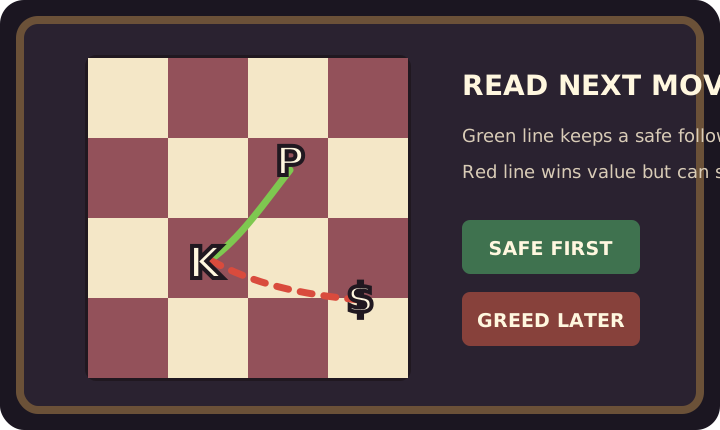
Gambonanza borrows the readability of chess pieces, but the goal is run survival rather than checkmate. A move is good when it captures or improves the board while still leaving a playable follow-up.
- Read the piece first: pawns, bishops, rooks, knights, queens, and special pieces matter because their movement shapes the puzzle.
- Before a capture, ask what enemy piece or tile becomes dangerous afterward.
- Use empty squares as future options; on a tiny board, space is a resource.
- If a move wins value but strands your next piece, it is often worse than a quieter setup move.
Gambits and tile upgrades
Gambits are the rule-bending part of the run. Tile and piece upgrades can make a weak board playable, but they also create traps when you chase a narrow combo too early.
| Choice | Best for | Risk | Manual note |
|---|---|---|---|
| Broad gambit | First clears | Low | Good when it helps many boards without needing a perfect setup. |
| Tile fixer | Awkward positions | Low-medium | Useful when it creates safe squares, protection, or reliable value. |
| Economy pick | Shop scaling | Medium | Strong only if you can survive while the investment pays back. |
| Narrow combo | Experienced runs | High | Avoid forcing it until you know which boards and bosses punish the plan. |
Stock and reserve pieces
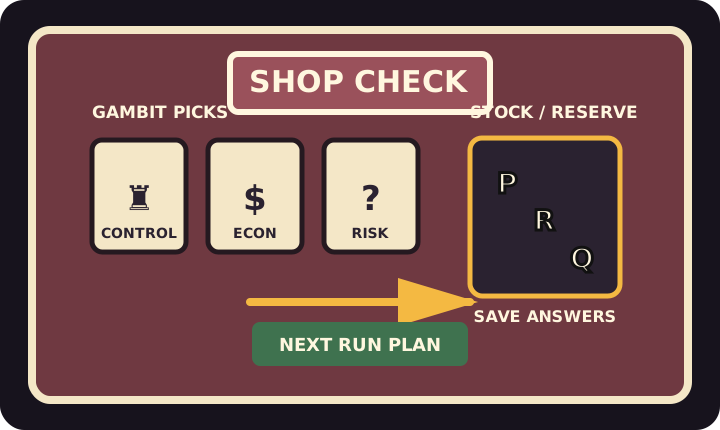
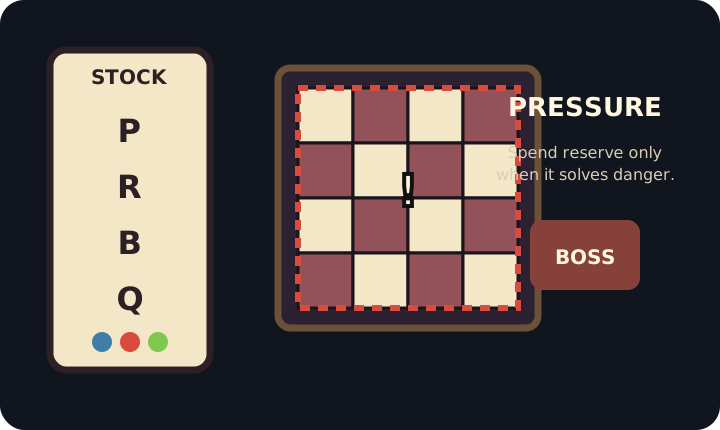
Stock and reserve choices are not just inventory. They are your emergency plan. The v1.1.0 update notes even adjusted Stock wording and room counts, which is a reminder that exact numbers can shift, but the decision rule stays useful: spend reserves when they solve danger, not just because they are available.
- Hold a reserve if the current board is still stable.
- Deploy a reserve when it creates a safe capture, blocks a losing line, or lets a key piece keep moving.
- Do not hoard forever; an unused reserve has no value if the board collapses first.
- Before bosses, check whether your reserve answers the boss rule or only adds random material.
Bosses and board pressure
Bosses change the texture of a run. Community and official update posts emphasize that bosses and pressure rules can expose weak plans, so the safe habit is to enter each boss with flexible movement, at least one emergency option, and a clear idea of what your build cannot handle.
A simple learning loop
Use this loop for your first few sessions. It turns every loss into better information for the next run.
- Step 1: clear boards by preserving one safe follow-up.
- Step 2: pick gambits that solve repeated problems, not just flashy ones.
- Step 3: save reserves for moments where the board is actually unstable.
- Step 4: before bosses, name your biggest weakness.
- Step 5: after a loss, identify whether it was greed, bad reserve timing, boss prep, or board pressure.
Glossary for new players
These are the terms this manual uses across the Gambonanza guide cluster.
| Choice | Best for | Risk | Manual note |
|---|---|---|---|
| Gambit | Run identity | Patch-sensitive | A rule-changing choice that can reshape pieces, tiles, economy, or board behavior. |
| Tile upgrade | Board control | Position-dependent | A board modifier that can create safety, value, or a future trap depending on placement. |
| Stock | Piece planning | Easy to mismanage | The pool or holding space that influences what pieces and options you can access. |
| Reserve | Emergency turns | Wasted if mistimed | A saved piece or option that should fix pressure, not decorate a safe board. |
| Board crumble | Pressure reading | High | A shrinking or unstable board state that punishes slow, greedy, or trapped play. |
Version note
Public launch information and early v1.1.0 context. Treat hard gambit and build rankings as provisional until direct play notes are added.
FAQ
Do I need to know chess to play Gambonanza?
Chess knowledge helps because pieces move in familiar ways, but Gambonanza is a roguelike run. You also need to manage gambits, tiles, reserves, bosses, and pressure.
What are Gambits?
Gambits are rule-bending choices that can change pieces, tiles, economy, or board behavior. For beginners, flexible gambits are safer than narrow combo pieces.
When should I use reserve pieces?
Use reserve pieces when they solve a real problem: a trapped piece, a boss rule, a dangerous tile, or a board state that is about to collapse.
What is board crumble?
Board crumble is the pressure idea this manual uses for unstable or shrinking board states. It punishes slow play and makes safe follow-ups more important.
Should I follow tier lists immediately?
Not yet. Public balance is still moving through early updates, so use principles first and treat hard rankings as patch-sensitive.