Quick answer
For your first Gambonanza runs, play for board safety before greed: keep one playable follow-up, prefer flexible gambits, save reserve pieces for pressure turns, and treat hard rankings as provisional until patch-tested.
The beginner mindset
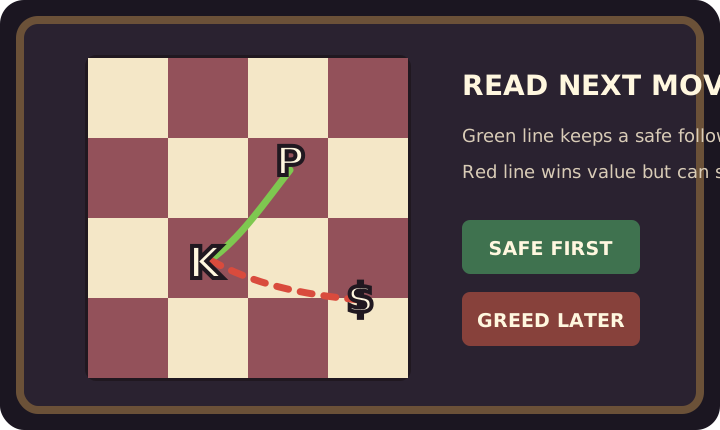
Gambonanza looks familiar if you know chess, but the run is not won by normal chess habits alone. The safest beginner mindset is to think in two layers: what does this move gain now, and what position does it leave for the next two turns?
- Do not judge a move only by the capture it makes.
- A weaker move can be better if it keeps reserve pieces and future squares useful.
- A gambit is a run rule, so ask whether it helps many boards or only one dream combo.
First-run checklist
Use this checklist before the run becomes noisy. It is intentionally principle-based because exact gambit and build rankings can change with patches.
- Before every greedy move, name your next safe move.
- Before taking a gambit, ask what kind of board it improves.
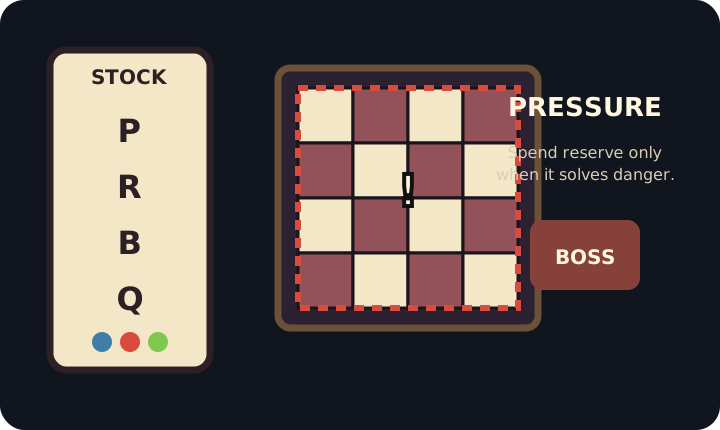
- Before spending a reserve piece, ask whether the current position is actually dangerous.
- Before a boss, check whether your plan still works when the board is not calm.
Beginner priority table
When two choices look close, choose the one that keeps the run flexible.
| Choice | Best for | Risk | Manual note |
|---|---|---|---|
| Safe board control | Learning runs | Low | Best default when you are not sure what the gambit pool can offer. |
| Flexible gambit | Longer runs | Low-medium | Good when it helps many positions instead of one narrow combo. |
| Reserve hold | Boss or crumble pressure | Medium | Strong if you are saving it for a known pressure point, weak if you never use it. |
| Greedy capture | High value boards | High | Only take it when the follow-up is still playable. |
What to avoid in your first hour
Most early losses come from overcommitting. You see a big reward, take it, and only then notice that the next board state has no clean answer.
When to move on to deeper guides
After you can explain why a run collapsed, move from this beginner page into the opening, gambit, build, and boss pages. That order gives better context than jumping directly into rankings.
- Use How to Play when a term is unclear.
- Use Best Opening Strategy when the first turns feel random.
- Use Best Gambits and Best Builds only after you understand what problem your run needs to solve.
Version note
Public launch information and early v1.1.0 context. Treat hard gambit and build rankings as provisional until direct play notes are added.
FAQ
Is Gambonanza just chess?
No. Chess movement helps, but gambits, reserves, tile choices, bosses, and board pressure turn the run into a roguelike strategy problem.
What should I focus on first?
Focus on leaving yourself a safe next move. Early consistency matters more than forcing a perfect build.
Should I spend reserve pieces early?
Spend them when they solve a real board problem. If the current board is still safe, holding a reserve for boss or crumble pressure is often stronger.
Are gambit rankings reliable yet?
Treat early rankings as provisional. Use flexible gambit principles until direct play notes and patch-specific testing are added.